











Unlocking Green Building Finance: the first step toward a National Coalition
Convened by the Green Finance Institute (GFI) and the Global Building Performance Network (GBPN)
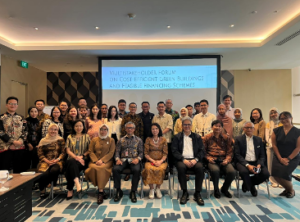
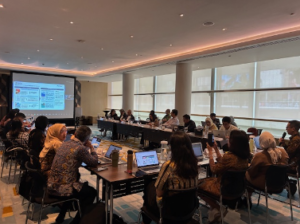
On 9 December more than thirty representatives from government agencies, financial institutions, property developers, and international organisations gathered for the Multistakeholder Forum on Cost-Efficient Green Buildings and Feasible Financing Schemes, marking the first convening in the formation of a green building financing coalition.
The forum underscored the urgent need for concrete fiscal and financial incentives to accelerate the adoption of green buildings in Indonesia. It forms part of an ongoing series of multistakeholder dialogues aimed at identifying cost-efficient design solutions, practical financing instruments, and potential project pipelines to support the expansion of green buildings across cities in Indonesia.
Despite growing awareness and technical readiness, stakeholders agreed that high upfront costs and weak incentives continue to hinder market uptake, particularly among small and medium-sized developers.
“Green buildings are proven to be more resilient and lower risk, yet green financing portfolios remain very small. The issue is not feasibility, but incentives,” said Poppy Ismalina, PhD, Indonesia Country Director at the GFI. “International experience shows that guarantees and concessional finance are essential to unlock private capital at scale.”
Banks: green assets are lower risk, but incentives are not effective
Financial institutions emphasized that green buildings consistently demonstrate better credit performance and lower non-performing loans, but existing regulatory incentives, such as Loan-to-Value (LTV) relaxation and liquidity support, have not translated into lower borrowing costs.
Abdul Rahmaan Fauzi, Vice President ESG Group at Bank Mandiri, noted that green building financing has reached IDR 5.6 trillion, representing only 0.4% of the bank’s total credit portfolio. He added, “the main barrier is that green certification remains voluntary. Without mandatory standards and fiscal incentives, banks alone cannot scale this market.”
Lina, Head of Good Corporate Governance & Sustainability at CIMB Niaga highlighted similar challenges. She said, “loan-to-value and liquidity incentives do not reduce interest rates because they apply to all property types, not specifically to green buildings. That is why Sustainability-Linked Loans are more effective, as they directly reward sustainability performance.”
Developers: fiscal incentives are critical for affordability
Developers, especially those building subsidized housing, stressed that green requirements cannot be absorbed under capped selling prices.
Dhony Rahajoe, Vice Chairman of KADIN for Housing and Settlement Areas commented, “eighty percent of developers are SMEs. Without tax incentives, interest-rate gaps, or construction loan support, green housing is not financially viable.” He also called for regulatory reform, proposing a shift from a norm-first approach to an SKPN model, where standards and criteria are agreed by the market before being formalized as regulations.
Developers at the forum urged the government to prioritize tax holidays, property tax reductions, and permit fee waivers, rather than relying solely on technical regulations.
Certification and global experience: green can be cost-efficient
From the certification perspective, the Green Building Council Indonesia (GBCI) emphasized that green certification, also known as a greenship certificate, should be viewed as a risk-management and asset-monitoring tool, not an added burden.
“A Greenship certificate is valid for three years. For a 15-year loan, banks effectively get five asset-quality checkpoints,” said I Parman Oesman, Secretary General of GBCI.
Presenting global and Indonesian case studies, Farida Lasida Adji, Country Director of GBPN, challenged the perception that green buildings are inherently expensive. “Some projects achieved zero additional cost with immediate returns. Hospitals and hotels show the fastest payback, while offices and education buildings deliver the highest operational savings,” she explained.
Regulators commit to policy harmonization by 2026 and blended finance
Regulators confirmed ongoing coordination to align standards, incentives, and data systems. OJK announced plans to revise sustainability reporting rules and mandate climate stress tests for banks by 2026, strengthening the financial sector’s role in the green transition.
Bank Indonesia acknowledged that liquidity incentives alone are insufficient, while the Ministry of Finance emphasized the role of low-cost international funding and carbon markets. “The state budget can only cover a small portion of climate needs. Private finance is essential,” said Irwan Darmawan, Deputy Director of Directorate of Multilateral Cooperation and Sustainable Finance, at the Ministry of Finance.
Banks and international partners highlighted blended finance as a practical solution to bridge upfront costs. SMBC Indonesia, in collaboration with IFC, introduced a model providing grants of up to 4% of loan value to cover certification costs.
Moving forward
The forum concluded that Indonesia’s green building sector is technically feasible and financially sound, but scaling it requires:
- concrete fiscal and financial incentives,
- harmonized regulations across institutions,
- and sustained collaboration between government, banks, developers, and cities.
As the first in a series of joint GFI–GBPN forums, this dialogue marks an important step toward building a bankable, cost-efficient, and scalable green building ecosystem in Indonesia.
Ismalina closed the forum noting, “the challenge is no longer awareness, but making green buildings bankable at scale.”
Related Content
12.05.25
Closing the Climate Finance Gap: Indonesia’s Ministry of Finance and Green Finance Institute, UK, Develop Governance Blueprint for the Sustainable Finance Committee
Closing the Climate Finance Gap: Indonesia’s Ministry of Finance and Green Finance Institute, UK, Develop Governance Blueprint for the Sustainable Finance Committee
02.12.25
Enhancing Sustainable Finance Governance in Indonesia
The Role of the Sustainable Finance Committee in Policy Harmonisation and Cross-Institutional Coherence

12.05.25
Investors’ Views on Sustainable Finance in Indonesia
Mobilising Investment for Decarbonisation