











Turning green buildings into bankable investments: how GFI is mobilising finance for Indonesia’s low-carbon transition

Indonesia’s building sector sits at the heart of the country’s decarbonisation. Buildings account for a significant share of energy demand and emissions, yet many developers and financiers still perceive green buildings as costly, complex, and commercially risky. Changing that narrative is critical if Indonesia is to unlock large-scale private investment for climate action.
On Thursday, 12 February 2026, the Green Finance Institute (GFI), in partnership with the Global Building Performance Network (GBPN), convened a high-level Focus Group Discussion (FGD) in Jakarta to tackle this very challenge.
This FGD marked the continuation of the first multistakeholder forum convened late last year to initiate the formation of a Coalition for Financing Green Buildings in Indonesia. Together, these forums form part of GFI’s broader effort to bring regulators, financial institutions, and industry players into a shared platform, moving from dialogue towards concrete collaboration to unlock green building finance at scale.
The discussion brought together Indonesia’s three financial sector regulators: the Ministry of Finance, the Financial Services Authority (OJK), and Bank Indonesia, the same institutions that will serve as coordinators and members of the upcoming Sustainable Finance Committee. Their presence sent a strong signal that green buildings are no longer a niche sustainability agenda, but a core part of Indonesia’s sustainable finance architecture.
At the centre of the discussion was a new draft guideline jointly developed by GFI and GBPN: “Cost-Efficient Green Buildings through Sustainability-Linked Loans (SLLs).” The guideline is designed to bridge two worlds that rarely meet in practice: the technical measures that improve energy efficiency in buildings, and the financial structures that make such investments attractive and bankable for lenders and developers.

“Green buildings represent one of the largest climate investment opportunities towards 2030. The challenge is not the lack of potential, but the perception that green buildings are always more expensive,” noted Sandra Pranoto, Senior Advisor of GBPN Indonesia. “With the right data and tools, many efficiency measures deliver strong returns and short payback periods.”
For regulators, the FGD was not just a consultation, it was about ensuring that policy frameworks translate into real financial products in the market.
“This forum is meant to produce something the industry and financial institutions can actually use,” said Woro Kusumaningrum, Deputy Director of Department of Banking Development and Regulation, OJK. “Green buildings are already recognised in Indonesia’s Sustainable Finance Taxonomy, and this guideline helps translate policy frameworks into practical financing instruments.”
From the industry perspective, the importance of common standards and credibility was equally clear. “Green building certification provides a common language for banks and the market to assess environmental performance,” said Ignesjz Kemalawarta, Chairperson of Green Building Council Indonesia. “Beyond emissions reductions, green buildings improve asset value, operating efficiency, and occupant well-being.”
The technical backbone of the guideline was presented by Bowo Setiyono, GFI Consultant and Associate Professor in Finance, Universitas Gadjah Mada, who emphasised the need for robust KPIs and credible monitoring frameworks. “Sustainability-Linked Loans only work when KPIs are clear, measurable, and linked to meaningful pricing incentives. The guideline is designed to help banks and developers’ structure credible business cases and monitoring frameworks.”
Crucially, the role of macroprudential policy in enabling green finance was also highlighted. “Macroprudential incentives can support green financing, but the key is ensuring that these incentives are transmitted to end borrowers, so that green buildings become genuinely more affordable,” said Arnita, Assistant Director of Directorate Macroprudential Policy, Bank Indonesia.
For GFI Indonesia, this FGD reflects a broader strategic ambition: to move Indonesia’s sustainable finance agenda from principles to practice. “Scaling green buildings in Indonesia is not just a technical challenge, it is a financing challenge,” said Poppy Ismalina, Country Director of GFI Indonesia. “Our objective with this guideline is to make cost-efficient green building investments bankable at scale, by aligning technical measures with financial incentives that work for both banks and developers. This will be followed by hands-on capacity building to ensure the guideline is applied in practice.”
The discussion revealed strong interest from banks, developers, and industry associations to scale up SLLs for green buildings, while also highlighting practical gaps, from incentive design and KPI calibration to market awareness and implementation capacity. These insights will directly feed into the final version of the guideline.
What’s next
With the guideline approaching finalisation, GFI and GBPN are shifting focus from design to delivery. The next phase will roll out targeted capacity-building programmes for both financial institutions and industry stakeholders. Banks will be supported to operationalise Sustainability-Linked Loans (SLLs) within their lending frameworks and risk management processes, while developers, building owners, and operators will be equipped to translate technical efficiency measures into bankable investment proposals.
To bridge the gap between theory and practice, the programme will also include interactive role-play sessions between banks and industry players, simulating the end-to-end SLL negotiation process, from early project scoping and KPI setting, to credit assessment, risk allocation, and commercial terms, until a mutually agreed SLL structure is reached for green building projects. This practical exercise is designed to demystify SLL structuring, surface real-world constraints on both sides, and build confidence for actual deal-making.
By pairing practical guidance with hands-on capacity building and deal simulation, GFI aims to unlock a pipeline of real transactions, helping turn green buildings from a sustainability aspiration into a scalable, investable asset class in Indonesia.
Related Content
Insights
23.12.25
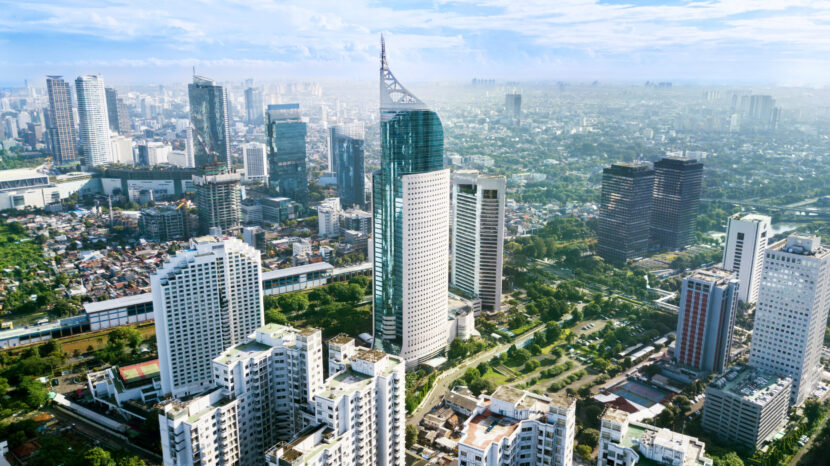
Unlocking Green Building Finance in Indonesia: the first step toward a National Coalition
On 9 December more than thirty representatives from government agencies, financial institutions, property developers, and international organisations gathered for the Multistakeholder Forum on Cost-Efficient...
02.12.25
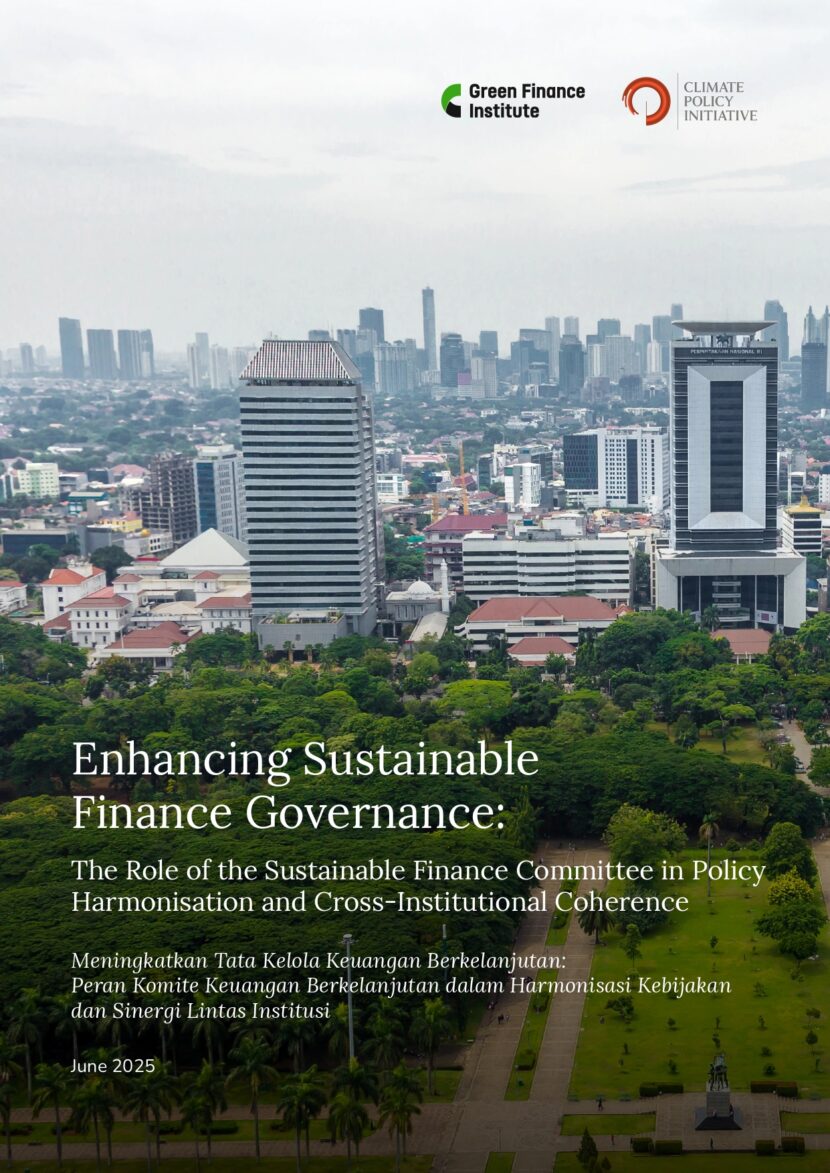
Enhancing Sustainable Finance Governance in Indonesia
The Role of the Sustainable Finance Committee in Policy Harmonisation and Cross-Institutional Coherence
12.05.25
Closing the Climate Finance Gap: Indonesia’s Ministry of Finance and Green Finance Institute, UK, Develop Governance Blueprint for the Sustainable Finance Committee
Closing the Climate Finance Gap: Indonesia’s Ministry of Finance and Green Finance Institute, UK, Develop Governance Blueprint for the Sustainable Finance Committee
