














Insights
Revenues for Nature: From Proven Models to Scalable Systems
Mobilising private finance for nature is no longer a theoretical challenge. Over the past five years, a growing body of evidence shows that viable, revenue-generating models already exist – and can attract investment when the right conditions are in place. The real challenge now is scaling these models into functioning systems capable of closing the global biodiversity finance gap, estimated at ~$700 billion annually.
Our latest report, “Revenues for Nature: From Proven Models to Scalable Systems,” distils insights from 60 revenue models across diverse ecosystems and geographies, highlights a clear shift: nature is increasingly recognised not as an externality, but as a core economic asset underpinning business resilience, supply chains, and long-term growth.
What works: From models to markets
Successful nature-based enterprises share a common foundation. They convert ecological outcomes into predictable, performance-linked revenues – often backed by regulation, supply chain demand, or risk management needs. Where revenues are stable and transparent, private capital – from corporates to asset managers – can and does flow.
However, these successes are often fragmented and context-specific. Scaling requires moving beyond isolated projects toward integrated, system-level approaches that align policy, finance, and delivery capacity.
Seven lessons for scaling private finance
The report identifies seven cross-cutting lessons:
- Revenue certainty drives investment: Buyer-backed, multi-year revenues are critical to bankability.
- Finance structures enable scale: Targeted funds and tailored instruments bridge early-stage risk and unlock capital.
- Landscape approaches outperform projects: Aggregation reduces risk and creates investable pipelines.
- Policy creates markets: Regulatory demand and clear frameworks are far more effective than voluntary action alone.
- Compensatory schemes can scale finance: When well-governed, they create predictable, compliance-driven demand.
- Catalytic capital is essential: Grants and concessional finance are key to moving from pilot to investment-grade.
- Delivery risk must be addressed: Technical assistance is critical to build capacity and ensure execution.
The shift ahead: Building investable systems
The report concludes that the pathway forward is not about inventing new mechanisms, but about connecting what already works. This requires a shift from fragmented pilots to coherent markets built on:
- Standardised, finance-ready metrics
- Aggregated pipelines of investable projects
- Pooled catalytic finance and technical assistance
- Policy frameworks that create demand and reduce risk
Two high-potential market pathways stand out: compensatory markets, driven by regulatory obligations, and resilience-based models, where investment in nature protects assets, stabilises supply chains, and avoids future losses.
The foundations for scaling private finance are already in place: proven models, emerging markets, growing investor interest, and increasing policy momentum. The opportunity now is to turn these components into functioning financial systems.
The way forward: how this transition is being delivered
Building these systems requires coordinated, practical action. Based on the report’s findings, six priority initiatives will focus on turning insight into implementation:
- Building and piloting a resilience measurement framework linked to financial performance, so nature outcomes translate into decision-useful metrics for investment
- Applying a supply-chain resilience prioritisation framework to identify high-impact, market-ready geographies for investment
- Establishing a Catalytic Capital Access Platform to address the critical early-stage financing gap and accelerate investment readiness
- Establishing a global technical assistance facility to standardise project preparation and reduce delivery risk at scale
- Developing and implementing Nature-Positive Pathways at sector level, embedding nature into economic and business strategy
- Scaling the C2S2 Network to strengthen institutional capacity and enable cross-country learning
Together, these actions respond directly to the systemic barriers identified in the report.
Other content
08.06.26
Unlocking Finance for Marine and Coastal Nature Recovery in the UK
Marine and coastal restoration projects can deliver significant environmental, social and economic benefits, but many struggle to access the funding and finance needed to...

16.04.26
Evaluating eligibility for transition finance: recognising the importance of nature
The GFI Hive team worked alongside the Transition Finance Council (TFC) on its Implementation Handbook: How to Apply the Transition Finance Guidelines, and as...

13.04.26
Accelerating High-Integrity Biodiversity Compensation Systems Worldwide
The Green Finance Institute has announced a new global partnership with the Wildlife Conservation Society, the Environmental Policy Innovation Center, Terrasos and UNDP Biofin...

09.04.26
Getting Started with Nature Data and Metrics: How UK Businesses are Moving from Awareness to Action
Metrics and targets are the fourth pillar of the Taskforce on Nature-related Financial Disclosure’s (TNFD) recommended disclosures. Metrics provide a structured, decision-useful basis for...

01.04.26
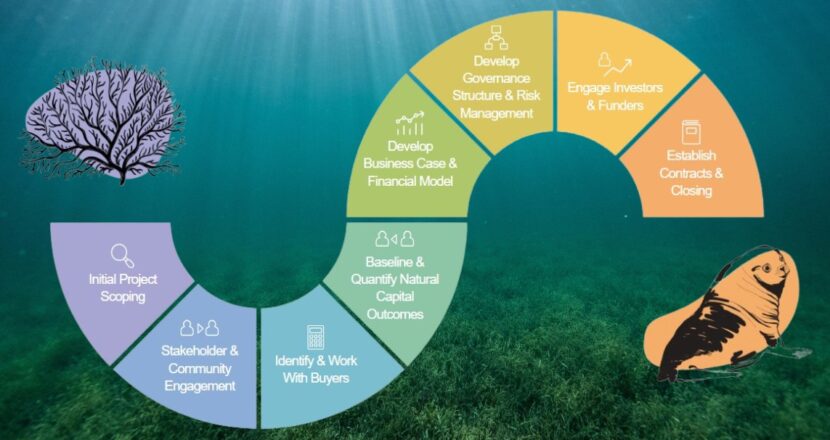
Revenues for Nature publishes Marine & Coastal Conservation Guidebook
The Revenues for Nature (R4N) Programme has published a guidebook focused on mechanisms that drive private capital into the protection and restoration of coastal...

17.12.25
Creating a financial system that rewards nature restoration and impact reduction
All organisations and institutions working towards this target of large-scale traditional investment into nature restoration would benefit by collectively considering how we can address...