









Upper Tana-Nairobi Water Fund
Upper Tana-Nairobi Water Fund
| Title | Upper Tana-Nairobi Water Fund |
| Country/Location | Kenya, Africa |
| Investment to Date | USD 18 million |
| Revenue Model | Water Fund |
| Private Investment/Finance Structure | Downstream water users provide voluntary CSR contributions to reduce cost of water treatment downstream |
| Public/Philanthropic Investment | Funding from the Kenyan Government followed by USD 6 million grant from the Global Environment Facility (GEF) |
| Env/Social Impact | Increased water availability, improved water quality and biodiversity uplift |
Summary
The Upper Tana-Nairobi Water Fund (UTNWF), established in 2015 as Africa’s first water fund, aims to enhance the quality and quantity of water in Kenya’s Upper Tana River Basin. The Fund was launched by The Nature Conservancy (TNC) in partnership with the Kenyan government and private sector. It operates by channeling investments from downstream water users, such as utilities, hydropower companies, and the government, into a trust that finances upstream conservation and sustainable land management practices. These efforts enhance soil water retention and reduce sedimentation. By investing in upstream conservation, local communities gain higher crop yields and financial support, while downstream users benefit from cleaner and more reliable water supplies, lower treatment costs, and improved hydropower efficiency. In 2021, it became a Kenyan-registered charity and transitioned to local management.
Introduction
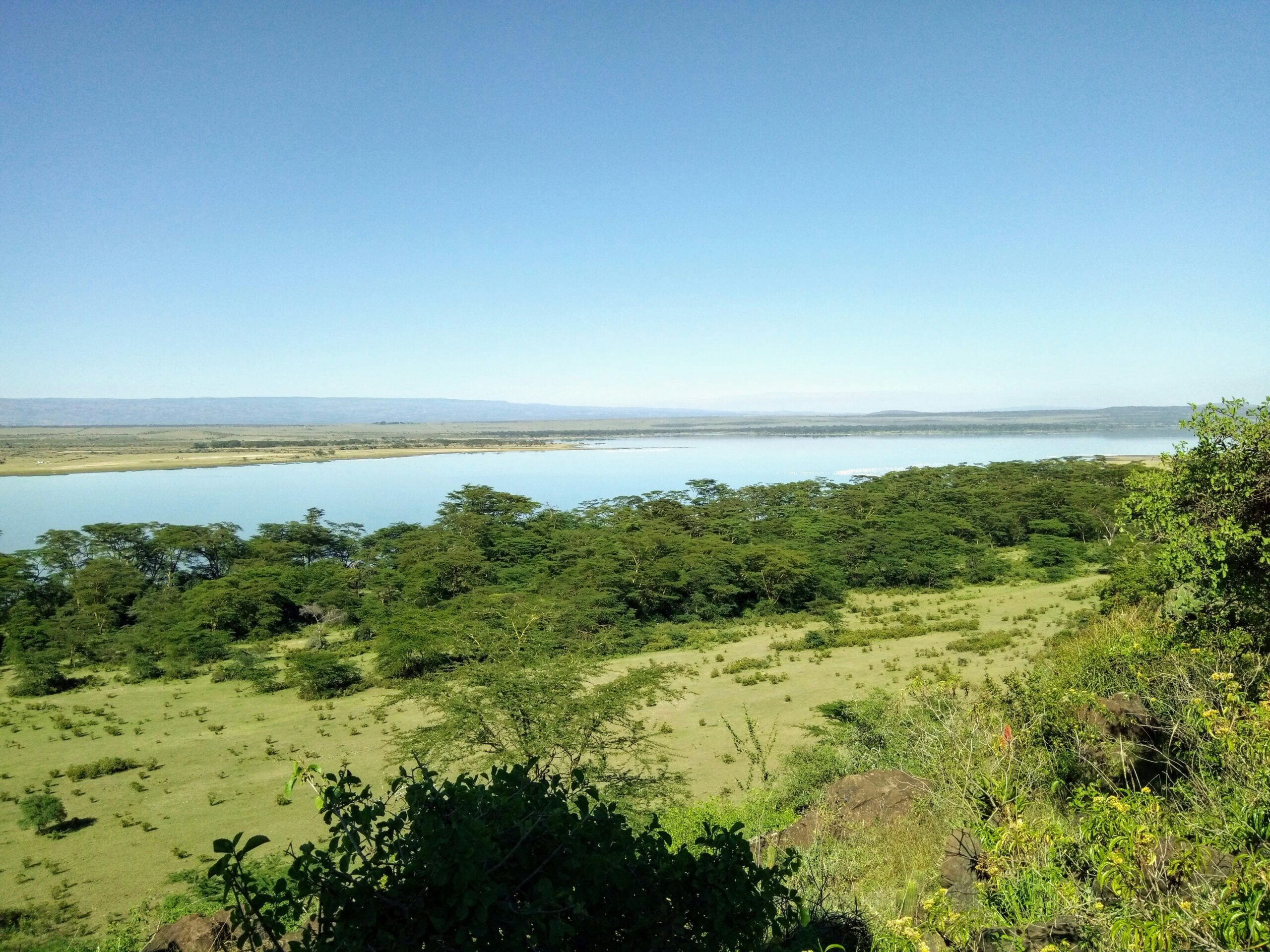
The Upper Tana-Nairobi Water Fund (UTNWF) is the first water fund developed in Africa to manage the Upper Tana River’s watershed which provides drinking water for Nairobi’s residents. The Tana River plays a major role in the health and economic development of Kenya. The river supplies water to the county’s key national parks, generates half of the hydropower produced in the country, provides 95% of water used in Nairobi and underpins the country’s most productive agricultural areas, supporting over 300,000 smallholder farmers [1].
Since the 1970s, the expansion of agriculture in the Upper-Tana’s watershed was leading to lower water levels and hydropower output as well as declining water quality due to increased sedimentation. Forests on the steep hillsides along the Tana River had been slowly cleared for agriculture, while reduced soil productivity from intensification of farming had pushed farmers onto steeper slopes. This resulted in soil being washed into the river, further reducing agricultural productivity and clogging hydropower facilities and water management infrastructure.

Setting up the UTNWF
Led by The Nature Conservancy, a steering committee was created in 2014 to assess the business case for setting up a water fund and analysed the potential benefits and costs of implementing upper watershed conservation activities around the Upper Tana [2]. The steering committee consisted of TNC, Nairobi City Water and Sewerage Company (NCWSC), Kenya Electricity Generating Company (KenGen), International Centre for Tropical Agriculture (CIAT), Tana and Athi Rivers Development Authority (TARDA), Water Resources Management Agency (WRMA), along with downstream corporates such as Coca Cola and East Africa Breweries [3]. To model the investment opportunity, the costs and benefits of different interventions, and the potential economic benefits, the analysis used:
- Resource Investment Optimisation System (RIOS): an open-source tool for targeting investments in conservation activities [4]
- Soil and Water Assessment Tool (SWAT): a tool to assess the likely impacts of different land management practices
- A range of economic valuation tools: to assess the potential economic benefits of the interventions on upstream and downstream communities.
The analysis concluded that investment into conservation measures in the watershed, administered through a water fund would deliver a viable return on investment and deliver substantial ecological and economic benefits, such as a 50% reduction in sediment concentration, up to a 15% increase in water yields and a USD 250,000 in annual cost savings for NCWSC [5]. The study also found that farming communities would benefit financially from changing management practices with up to USD 3 million per year in increased agricultural yields. Overall, the committee estimated that a USD 10 million upfront investment in the Fund could yield USD 21.5 million in economic benefits over 30 years [6].
The Fund was officially launched in 2015 with funding from the Coca Cola Foundation and the Kenyan Government, and the International Fund for Agriculture (IFAD) acting as the implementing agency. In 2016, the Global Environment Facility (GEF) contributed USD 6 million in grant funding and secured an additional USD 25 million in co-financing to set up the Fund [7]. The Fund was incorporated as a Trust in 2017, with funds managed as an endowment to ensure a stable source of funding over the long term. Overall, the Trust has been able to mobilise and deploy over USD 15 million in public sector funding and over USD 4 million from the private sector and foundations [8].
Interventions
The Fund focused its interventions on shifting agricultural practices to decrease erosion into the Tana.Funding was used to train farmers in new practices and to provide them with materials and input. The primary interventions are:
- Introducing vegetation buffer zones along riverbanks
- Training and materials to implement agroforestry systems
- Terracing steep farmlands to decrease erosion
- Restoration of degraded lands at forest edges
- Planting grass buffer strips in farmlands
- Mitigating erosion from dirt roads
In September 2021, the Fund became an independent, Kenya-registered organisation, no longer under the TNC umbrella. The Fund is now managed by local leadership as an independent Trust. The Fund’s interventions are designed not only to improve water quality but also to benefit farmers and build on existing conservation tools such as Rainforest Alliance Certification for conservation measures, with support to 8,500 smallholder coffee farmers on the obtention of this certificate in the project first three years [9].
Replicability and scalability
As the first of its kind in Africa, the Upper Tana-Nairobi Water Fund has been a knowledge tool to inform the design of new water funds across the continent, for example in the Great Rift Valley in Kenya, in Addis Ababa in Ethiopia and in the Sebou Basin in Morocco or in Tanga in Tanzania [10]. The UTNWF provides a proven model to work at scale with a large number of local stakeholders, a critical criteria for the implementation of nature-based revenue models notably in low-and middle income countries – in this instance the project involved 165,000 local farmers to plant over 3 million trees to stabilise soils and increase carbon sequestration in the area [11].
Beyond the inclusion of farmers and the local communities, one of the strengths of the project is the integration of a women’s empowerment component. At its launch the project provided support to 39% women-led households, in comparison with the average of 24% women-led households in the region [12].
Lessons Learned
- Developing a robust business case using recognised methodologies is an integral part of designing an investment proposition for NbS for water. The business case is necessary for demonstrating the cost-effectiveness and potential economic, environmental and social co-benefits of proposed interventions. This is an essential tool for attracting investment in watershed conservation programmes.
- The Upper Tana-Nairobi Water Fund is a strong example of the economic opportunity that investments in green rather than grey infrastructure represent for better water quality and availability. Research carried out on behalf of the Fund found that a USD 10 million investment in the Fund’s conservation activities could return USD 21.5 million in economic benefits over 30 years [13].
- The UTNWF illustrates the ability of water fund schemes to engage a large number of smallholder farmers and to combine better environmental outcomes and increased livelihoods for these communities. Training farmers on the reduction of soil erosion which resulted both in higher agricultural yields and improved downstream water quality ensured the sustainability of the project.
- Active communication around the project both locally and internationally is a strong tool to mobilise more support for the project from funders to the general public. The UTNWF used a combination of media engagement, community outreach, school groups presentations and marathon sponsorships.
- The inclusion of capacity building activities for farmers is at the core of this scheme’s success and contributes largely to the sustainability of the UTNWF by helping farmers improve their positive impact/reduce their negative impact on water as well as becoming more resilient.
Updated as of August 2025
[1] Upper Tana Nairobi Water Fund Trust (2021). Upper Tana Nairobi Water Fund Strategic Plan 2022 – 2026
[2] TNC (2015). Upper Tana-Nairobi Water Fund Business Case. Version 2. The Nature Conservancy: Nairobi, Kenya
[3] Ibid.
[4]TNC Water Funds Toolbox: Tools for Analysis
[5] TNC (2015). Upper Tana-Nairobi Water Fund Business Case. Version 2. The Nature Conservancy: Nairobi, Kenya
[6] Ibid.
[7] The GEF (2016). Global Environment Facility. Food-IAP: Establishment of the Upper Tana Nairobi Water Fund (UTNWF)
[8] Earthly.Agroforestry – Upper Tana, Kenya
[9] International Water Association. The Upper Tana-Nairobi Water Fund
[10] The GEF (2016). Global Environment Facility. Food-IAP: Establishment of the Upper Tana Nairobi Water Fund (UTNWF)
[11] Earthly. Agroforestry – Upper Tana, Kenya
[12] Ibid.
[13] Blended Finance Taskforce, Case Study, Paying for nature, Nature Funds
Case study from Revenues for Nature Guidebook Series: Nature-based Models for Unlocking Private Investment into Freshwater (Expanded Edition)
