










Finance Live at London Climate Action Week: where capital is moving, and what still needs to change
More than 1,300 events were scheduled across London Climate Action Week (LCAW), but as extreme heat warnings intensified, many were disrupted or cancelled. That made the conversations feel more immediate, shaping discussions on capital, infrastructure, industrial transformation and nature.
To help navigate it all, Finance Live returned for its second year, hosted by Axel Threlfall, Reuters’ Editor-at-Large, providing in depth analysis each morning throughout LCAW. Delivered in partnership with LSEG and Reuters as a daily broadcast news programme, Finance Live brought together leaders from across finance, policy and industry.
Catch up on the 2026 conversation below or tune in to each episode on demand here.
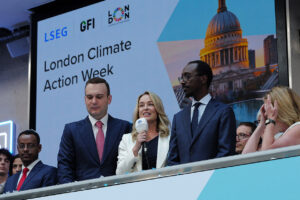
The clear message throughout the week: Capital flows remain uneven, with strong momentum in developed markets but persistent gaps in emerging ones. Capital is moving, but not yet at the pace or in the sectors needed to deliver the transition.
The solution? Radical coordination. As Rhian-Mari Thomas said on Monday’s opening Finance Live episode:
“What we really need to see this week is beyond cooperation. We want to see really radical coordination. How do we bring all the value chain actors together, all the way from the politicians setting out their ambitious goals, through to the right institutions that can deploy public capital and structure the right transactions with private capital.”
Delivery depends on shared understanding of our objectives and the radical coordination required to achieve them. From policy stability to infrastructure, especially grids, the ability to enable capital to flow not only into mature markets, but into emerging economies where it is needed most.
Monday: where is capital flowing internationally in 2026?
The opening conversation focused on energy security and international capital flow. The bottom line: capital is there, but not flowing where it needs to.
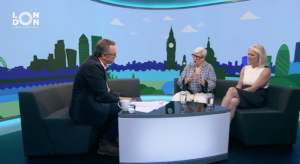
Rachel Kyte described a transition already underway, saying people want “clean, affordable energy” and that “the energy transition that is underway will give them that.” Mindy Lubber reinforced that momentum is real, pointing to global investment and the growing competitiveness of clean energy.
Catherine McKenna pointed to the same conclusion from a policy perspective: the solutions exist, but investors still need stable frameworks to deploy capital at scale. But Delano Dalo brought the focus back to structure. The issue, he said, is not a lack of capital but how to design “risk sharing mechanisms” to direct it into infrastructure and emerging markets.
Watch Monday’s episode: ‘Where is capital flowing internationally in 2026?’ here, speakers include:
- Rachel Kyte, UK Special Representative for Climate
- Catherine McKenna of Climate and Nature Solutions
- Mindy Lubber of Ceres
- Rhian-Mari Thomas of the Green Finance Institute
- Jane Goodland of LSEG
- Riddhima Yadav, Investor and Advisor
- Nadia Karkar of 500 Global
- Delano Dalo of PT Sarana Multi Infrastruktur
- Helen Clarkson of Climate Group
Tuesday: How can we scale cleantech in the green economy?
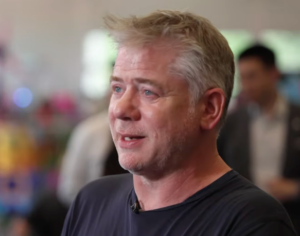
By Tuesday, the focus shifted to financing cleantech, with speakers highlighting the challenge is no longer the technology but the systems.
Nigel Topping reduced the issue to a simple principle: “the main thing is long term policy stability,” because that is what markets can invest against.
Greg Jackson made the economics tangible. Electric vehicle adoption is “high and accelerating,” and crucially “we can save money on networks and grids by going electric.”
Around that, a consistent constraint emerged. Julia Reinaud said “transmission is absolutely key to the transition,” while Sarah Kapnick pointed to growing investor focus on grid infrastructure. While Amer Baig and Ambroise Fayolle pointed to rising demand and the need for institutional capital to align and absorb risk.
Watch Tuesday’s episode: ‘How can we scale cleantech in the green economy?’ here, speakers include:
- Julia Hoggett of LSEG
- Katie White MP of Department for Energy Security and Net Zero
- Jaime de Bourbon de Parme of the OECD
- Jaakko Kooroshy of LSEG
- Nigel Topping of Ambition Loop
- Greg Jackson of Octopus Energy
- Leslie Maasdorp of British International Investment
- Jesper Brodin of The B Team
- Julia Reinaud of Breakthrough Energy
- Sarah Kapnick of J.P. Morgan
- Tim Reid of UK Export Finance
- Amer Baig of the Green Climate Fund
- Ambroise Fayolle of the European Investment Bank
- Simon Jessop of Reuters
Wednesday: How are transition plans driving real economy transformation?
Wednesday brought the focus firmly into the real economy as speakers discussed the financial impacts of climate and nature degradation and the opportunities to scale industrial decarbonisation.
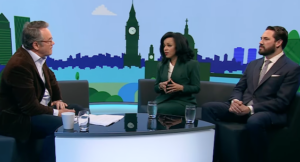
David Schwimmer pointed to the growing scale of the green economy, while Mark Versey described climate change as “an existential threat to an insurance company,” underlining its financial impact.
Peter Bakker highlighted energy security as a key driver of policy action, while Turner made the constraint clear: without a carbon price, industrial decarbonisation will not scale. Kingsbury focused on execution, noting that once projects are proven, they can be replicated.
Gbadegesin brought the financing challenge into focus, explaining that scaling depends on structuring investments so capital can flow more efficiently, particularly into emerging markets.
Watch Wednesday’s episode: ‘How are transition plans driving real economy transformation?’ here, speakers include:
- David Schwimmer of LSEG
- Mark Versey of Aviva Investors
- Peter Bakker of the World Business Council for Sustainable Development
- Fiona Basset of FTSE Russell
- Bertrand Millot of La Caisse
- Tariye Gbadegesin of Climate Investment Funds
- Christopher Kaminker of Blackrock Investment Institute
- Shaun Kingsbury of Just Climate
- Adair Turner of the Energy Transitions Commission
- David Harris of LSEG
- Jens Nielsen of World Climate Foundation
- Jonnie Hughes of Open Planet
- Ralph Chami of Blue Green Future
Thursday: nature, resilience and lessons from China
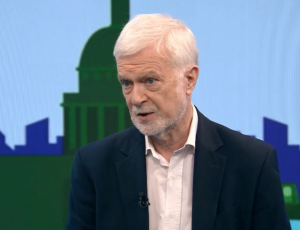
We closed on Thursday with a focus on nature as infrastructure and what can be learned from China’s approach.
Prof Sir Jim Skea set the context, warning that temperatures are rising while “it’s very clear the money is starting to move.”
Harvey Locke added that while financial returns are now emerging in restoration, protecting intact ecosystems remains harder to finance.
Prof Nicola Ranger pointed to growing flows of investment into nature-linked assets. As she put it, companies are already “putting real money into this because they see it as essential for their resilience and businesses.”
Marisa Drew pointed to the fact that nature is now embedded within China’s five-year plan, a point reinforced by Ma Jun, Lisa Sachs and Rhian Mari Thomas, who highlighted China’s approach on aligning policy, capital and industrial strategy.
Watch Thursday’s episode: ‘How is nature finance moving from risk to resilience?’ here, speakers include:
- Jim Skea of the IPCC
- Saker Nusseibeh of Federated Hermes
- Richard Deverell of Royal Botanic Gardens, Kew
- Tony Dalwood of Gresham House
- Marisa Drew of Standard Chartered
- Harvey Locke of the IUCN World Commission on Protected Areas
- David Craig of TNFD
- Nicola Ranger of LSE
- Rhian-Mari Thomas of the Green Finance Institute
- Lisa Sachs of the Columbia Center on Sustainable Investment
- Alderman Sir Charles Bowman of City of London Corporation
- Ma Jun of the Green Finance Committee of China Society for Finance and Banking

Across the week, the direction was clear. Capital is moving. Technologies are proven. The economic case is strengthening. What we need now is stronger, more radical coordination.
Finance Live is produced in collaboration with the Green Finance Institute, LSEG and Reuters.