












Insights
Asking Better Questions on Nature: A Guide for Board Directors
June 2 2025 – The “Asking Better Questions on Nature” series is designed to help senior executives across business and finance surface critical insights about nature-related dependencies, impacts, risks and opportunities to inform their decision making. The first guide released is for board directors to help surface the decision-useful information they need to ensure that nature-related issues are being appropriately incorporated into the company’s governance, strategy, risk management and capital allocation decision making. It features 12 key questions that board directors may wish to ask company executives and consider in board meetings, and the sort of analysis they should expect to see from their organisations to support those discussions.
Nature as a Strategic Business Risk and Opportunity
The guide outlines how nature-related issues—such as biodiversity loss, pollution, and freshwater scarcity—pose significant financial and operational risks. It also highlights the growing legal, regulatory, and investor expectations for companies to manage these risks. Directors are reminded that managing nature-related dependencies and impacts is part of their fiduciary duty to ensure long-term business viability. The guide encourages directors to view nature not only as a source of risk but also as a driver of innovation and opportunity. It promotes the concept aligning business strategies with global goals to halt and reverse nature loss by 2030.
A Framework for Board Engagement
The document presents 12 key questions across five thematic areas to help directors probe management’s approach to nature:
- Understanding Nature’s Relevance: How does the business depend on and impact nature? What are the associated risks and opportunities?
- Integrating Nature into Decision-Making: How are nature-related issues assessed, measured, and embedded into strategy, risk management, and capital allocation?
- External Context: Are companies keeping pace with evolving regulations, standards, and investor expectations?
- Organisational Competence: Do boards and management have the skills and systems to manage nature-related issues effectively?
- Board Reflection: Are directors fulfilling their legal duties regarding nature, and how is this documented?
Building Capacity and Accountability
To ensure long-term resilience, the guide stresses the importance of institutionalising nature-related knowledge and processes within organisations. It also calls for regular board-level discussions, training, and the use of credible data and metrics.
Access the full report here.
Sign up to the TNFD UK Consultation Group for TNFD updates, insights and events. If you have any questions or comments on this resource, please contact us at TNFDNCG@gfi.green
Other content
08.06.26
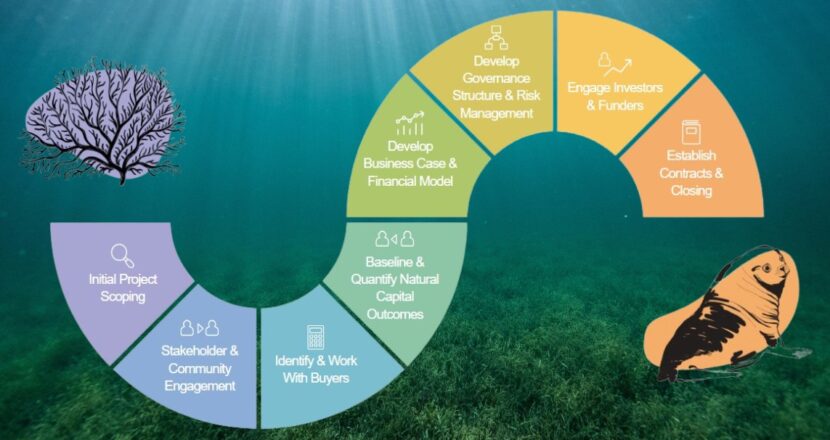
Unlocking Finance for Marine and Coastal Nature Recovery in the UK
Marine and coastal restoration projects can deliver significant environmental, social and economic benefits, but many struggle to access the funding and finance needed to...
27.04.26
Revenues for Nature: From Proven Models to Scalable Systems
The GFI Hive's latest report, “Revenues for Nature: From Proven Models to Scalable Systems,” distils insights from 60 revenue models and financing mechanisms across...

16.04.26
Evaluating eligibility for transition finance: recognising the importance of nature
The GFI Hive team worked alongside the Transition Finance Council (TFC) on its Implementation Handbook: How to Apply the Transition Finance Guidelines, and as...

13.04.26
Accelerating High-Integrity Biodiversity Compensation Systems Worldwide
The Green Finance Institute has announced a new global partnership with the Wildlife Conservation Society, the Environmental Policy Innovation Center, Terrasos and UNDP Biofin...

09.04.26
Getting Started with Nature Data and Metrics: How UK Businesses are Moving from Awareness to Action
Metrics and targets are the fourth pillar of the Taskforce on Nature-related Financial Disclosure’s (TNFD) recommended disclosures. Metrics provide a structured, decision-useful basis for...

01.04.26
Revenues for Nature publishes Marine & Coastal Conservation Guidebook
The Revenues for Nature (R4N) Programme has published a guidebook focused on mechanisms that drive private capital into the protection and restoration of coastal...