










Getting Started with Nature Data and Metrics: How UK Businesses are Moving from Awareness to Action
UK businesses aren’t waiting for perfect data to get started with the Taskforce on Nature-related Financial Disclosures (TNFD) aligned metrics. Companies across five key sectors (retail, food, and hospitality, asset management, banking, built environment, and water utilities) are already reporting a wide range of TNFD-aligned metrics (over 20 in total). They are using these to shape real business decisions, from steering sourcing and investment choices to strengthening risk management. While the data gaps remain, businesses are combining existing internal data, third-party tools and pragmatic assumptions to overcome these. The message is clear, begin with what you have, learn by doing, and let ambition scale alongside capability.
GFI’s new resource, TNFD: Getting Started with Data and Metrics, provides a look at how major UK businesses across five sectors are implementing TNFD guidance on metrics and incorporating these into decision-making processes. It’s a ‘how to’ guide for any UK business considering constructing TNFD-aligned metrics and wondering how others have approached the process.
TNFD-aligned metrics have a clear aim – to measure and communicate how businesses impact and depend on nature, and how they are exposed to nature-related risks and opportunities. 95 UK businesses have committed to report in line with the TNFD recommendations, and across their experience, TNFD-aligned metrics are proving particularly valuable in three areas:
- Risk management: From water scarcity disrupting mining to supplier activities in ‘sensitive’ locations, businesses are layering TNFD-aligned metrics onto existing risk management frameworks to identify where operational risks are mounting.
- Commercial strategy: A range of businesses are using spatial footprint and commodity risk metrics to steer sourcing decisions, prioritise supplier engagement, and shape operational planning.
- Investment and capital planning: Water utilities and financial institutions are using TNFD-aligned metrics to assess resilience needs, evaluate the financial benefits of nature-based solutions, and support the issuance of green finance instruments.
In short: the metrics aren’t just being filed away for disclosure, they’re shaping core business decisions.
Every sector faces material data gaps, from inconsistent definitions across providers to limited spatial detail in supply chains. Yet businesses are finding ways to move forward despite these barriers. Almost every business engaged shared the same approach: begin with direct operations and the data you already collect; focus on the highest impact commodities or locations; and build outward as processes and confidence mature. Businesses are using approximation as a first pass, with structures in place to replace modelled datasets with collected data over time.
A critical part of this journey is tracking progress over time. Businesses are not just collecting metrics to understand current impacts. They are beginning to track trends, reductions and improvements. This includes demonstrating decreased pressure on nature (such as lower water use or reduced land disturbance) as well as evidencing positive outcomes from restoration, regenerative practices and nature-based solutions. Long-term, comparable metrics help organisations show progress, refine targets and make credible claims.
The TNFD is also supporting several major initiatives to accelerate progress:
- The Nature Measurement Protocol, being developed by NPI, WBCSD, TNFD and partners, will create the nature equivalent of the GHG Protocol.
- TNFD’s Recommendations to Upgrade the Nature Data Value Chain outlines how public and proprietary nature data could become more accessible, interoperable, and decision useful.
- The Nature Positive Initiative’s consultation on state-of-nature indicators will help bring much needed clarity to the use of metrics and formulation of nature-positive claims.
Together, these programmes will help ensure nature data becomes standardised, scalable, and comparable across markets.
The GFI, as the convenor of the TNFD UK Consultation Group, continues to support UK businesses as they pilot, adopt, and scale nature-related financial disclosures. For 2026, this includes sector-specific teach-ins, webinars, bilateral support, and the GFI Nature Transition Plan Pilot Group supporting UK businesses to integrate nature into transition planning. If you are a UK business interested in support, please get in touch.
See other GFI resources on how the UK market is implementing TNFD recommendations here, and access all TNFD publications here.
Related Content

Hive
Insights
17.09.25
TNFD: From disclosure to action
At COP16 in Colombia, the global community came together to discuss how to make the Kunming-Montreal Global Biodiversity Framework a reality.

15.07.24 36 min
Episode 26: Emily McKenzie, Technical Director, TNFD
This week Emily McKenzie joins us to share more about the inner workings of the Taskforce on Nature-related Financial Disclosures and the challenges of...
Other content
08.06.26
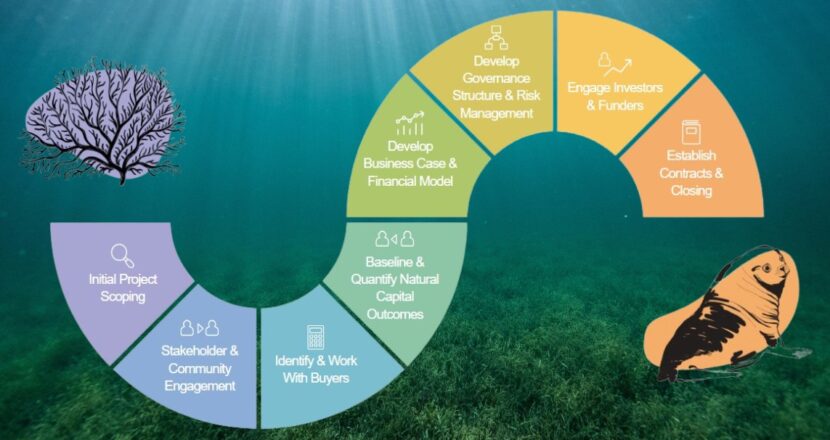
Unlocking Finance for Marine and Coastal Nature Recovery in the UK
Marine and coastal restoration projects can deliver significant environmental, social and economic benefits, but many struggle to access the funding and finance needed to...
27.04.26
Revenues for Nature: From Proven Models to Scalable Systems
The GFI Hive's latest report, “Revenues for Nature: From Proven Models to Scalable Systems,” distils insights from 60 revenue models and financing mechanisms across...

16.04.26
Evaluating eligibility for transition finance: recognising the importance of nature
The GFI Hive team worked alongside the Transition Finance Council (TFC) on its Implementation Handbook: How to Apply the Transition Finance Guidelines, and as...

13.04.26
Accelerating High-Integrity Biodiversity Compensation Systems Worldwide
The Green Finance Institute has announced a new global partnership with the Wildlife Conservation Society, the Environmental Policy Innovation Center, Terrasos and UNDP Biofin...

01.04.26
Revenues for Nature publishes Marine & Coastal Conservation Guidebook
The Revenues for Nature (R4N) Programme has published a guidebook focused on mechanisms that drive private capital into the protection and restoration of coastal...
17.12.25
Creating a financial system that rewards nature restoration and impact reduction
All organisations and institutions working towards this target of large-scale traditional investment into nature restoration would benefit by collectively considering how we can address...