














Financing Natural Flood Management
Financing Natural Flood Management
Financing Natural Flood Management
As part of a broader work package on financing UK nature recovery, the Department for Environment, Food & Rural Affairs (Defra) commissioned the Green Finance Institute (GFI) to explore how private sector sources of finance could be unlocked to help facilitate the delivery of natural flood management at scale across England.
Since 1998, England has seen six of the ten wettest years on record with the winter of 2013/14 being the wettest winter for 250 years when over 13,000 properties were flooded. The Climate Change Committee has forecast that in a 2oC warming scenario, there will be a 20% increase in heavy rainfall events by 2100 and Expected Annual Damages (EAD) from flooding could rise by up to 50% by the 2080s. To respond, natural flood management (NFM) interventions, such as reconnecting rivers to floodplains, woodland creation and urban green infrastructure, will be required alongside traditional infrastructure to help mitigate the effects of a changing climate.
Alongside addressing flood risk, natural flood management interventions also offers a host of other co-benefits for society. For example, wetland creation provides habitats for numerous bird, invertebrate and plant species, and woodland creation increases carbon sequestration. Urban green infrastructure focussed on flood alleviation can also provide increased public access to green space and can be a cost-effective means for meeting the Sustainable Development Goals in cities.
Despite growing interest in natural flood management, these projects currently attract a fraction of the total public funding available for flood risk management projects in England. With increased pressure on available public finances for flood risk reduction, the role of private finance in delivering NFM at scale is therefore of paramount importance if we are to adapt to climate change and reduce the risk of damages to people, property and infrastructure.
Strategic Working Group
In mid-2023, the GFI brought together a cross-sectoral, multi-disciplinary Strategic Working Group of 20 members (below) to identify barriers to private capital being deployed into natural flood management (NFM), and to co-create and recommend actionable solutions to be included in this report. To develop the report, the GFI convened the Strategic Working Group regularly, in addition to hosting public workshops and liaising with over one hundred individuals from the private, public and third sectors.
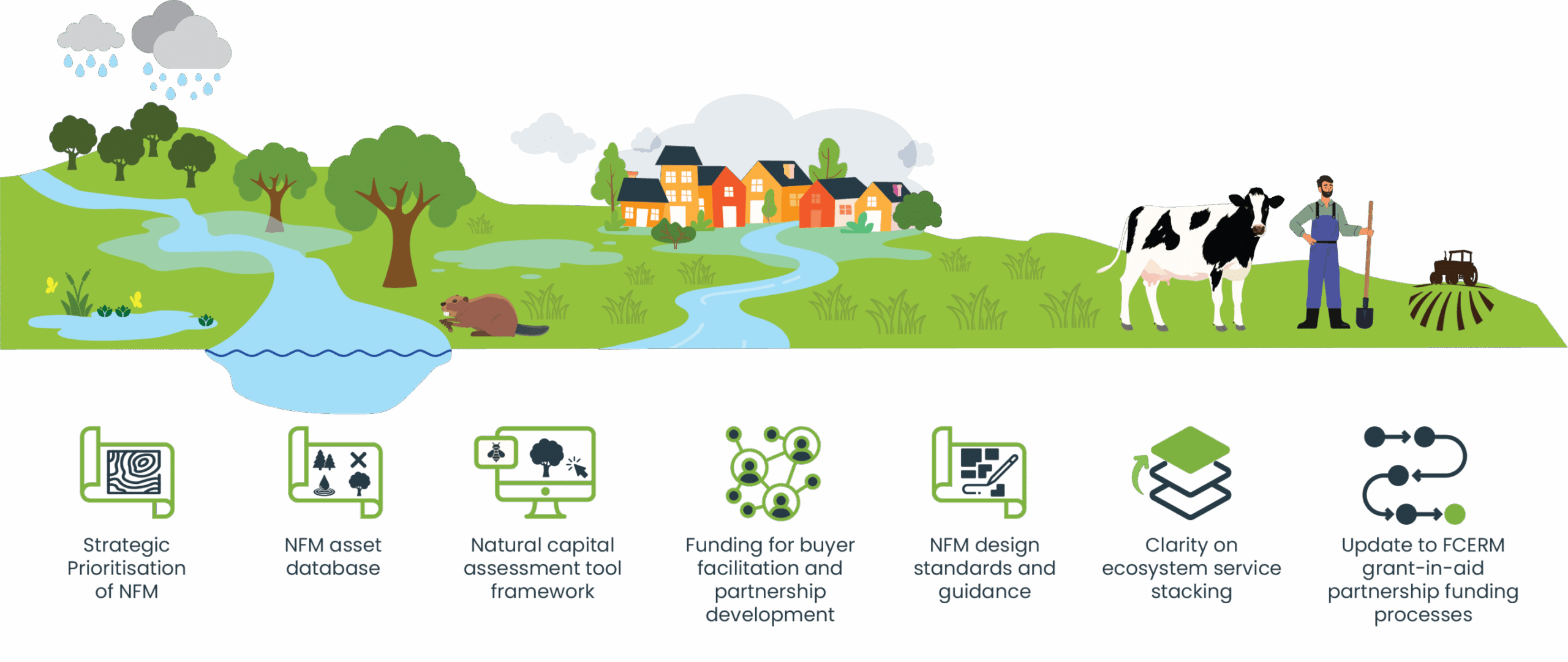
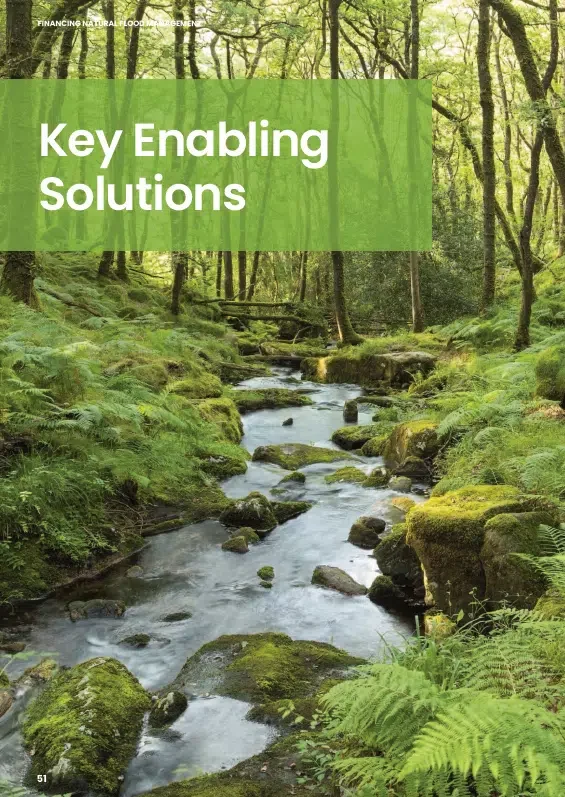
In March 2024, the GFI launched the Financing Natural Flood Management report that sets out the barriers to private finance being deployed into NFM outcomes. An overarching barrier, is that there is a lack of demand for flood risk reduction outcomes generated by NFM projects, from the private sector. This results in many NFM projects suffering a funding gap and not getting off the ground. To build this demand, the Group set out seven Key Enabling Solutions that if actioned, would help remove barriers to finance and unlock demand for NFM outcomes.
The Strategic Working Group was concluded in April 2024.
Barriers

Confidence
NFM is inherently complex, potentially involving interventions and practices some distance from the properties and businesses at risk. This can make it challenging to calculate measurable risk reduction to justify investment.

Co-Benefits
NFM alone may not provide sufficient commercial imperative for investment. The co-benefits generated by these projects can be powerful drivers for private sector investment. But market and process restrictions prevent this potential from being realised.

Coordination
The delivery of NFM can involve multiple stakeholders from many different sectors. There is currently no framework for the coordination of private sector buyers, investors and other key stakeholders which could potentially attract more strategic investment.
Natural Flood Management – Key Enabling Solutions
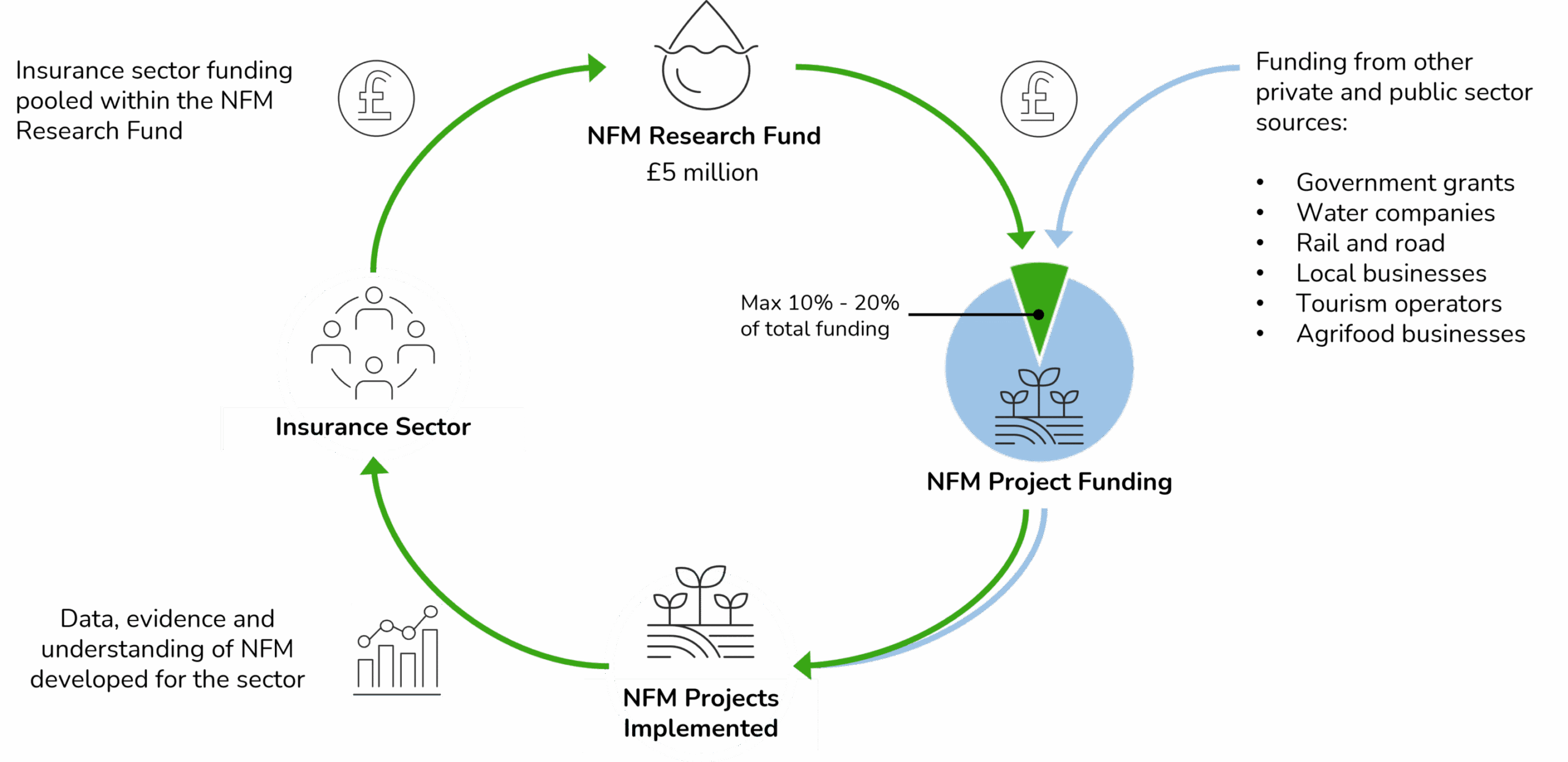
The Insurance Sector – NFM Research Fund
Full reports
Supportive documents
Co-Chairs

Dr Bev Adams, Marsh Insurance Group
Head of Climate and ESG at Marsh Advisory and Director of CLIFF – the Coastal Loss Innovative Funding and Financing Initiative. A climate resilience specialist and part of the team that set up Flood Re. Dr Adams has also previously worked at the World Bank as a Specialist Advisor for the National Cyclone Risk Management Project (NCRMP).

Keith Ashcroft, Lake District Foundation
Chair of the Lake District Foundation, Keith was previously the Environment Agency’s Area Director for Cumbria and Lancashire. Keith has experience of extensive delivery of natural flood management and in his role at the EA, he sponsored a £600 million flood risk investment programme and oversaw planning, response and recovery from major flood events in North West England. A former Chair of the Cumbria Local Resilience Forum, Keith was also sponsor of the EU funded Natural Course programme which facilitated the Wyre Catchment Natural Flood Management Project.
Strategic Working Group Members

James Airton – Natural Capital Planning and Strategy Manager, United Utilities

Adam Brown – Landscape Specialist, WWF-UK

Dr Nick Chappell – Reader in Hydrological Processes, University of Lancaster

Keith Davie – Project manager and Senior External Funding Lead, Environment Agency

Tom Dyke – Corporate Finance Manager, Triodos Bank

Sam Evans – Head of Natural Environment, Greater Manchester Combined Authority

Tim Field – Founder & Facilitator, North East Cotswold Farmer Cluster CIC

Jon Hollis – Natural Flood Management Programme Manager

Gary Hueting – Chief Operating Officer, Markerstudy Insurance Group

Jonathan Kassian – Head of Research, Flood Re

Aidan Kerr – Director, Public Sector Solutions, Swiss Re

Rebecca Lea – Manager, Investment and Climate, Association of British Insurers

Lucy Lee – UK Chief Advisor, WWF-UK

Steve Maslen – Director, JBA Consulting
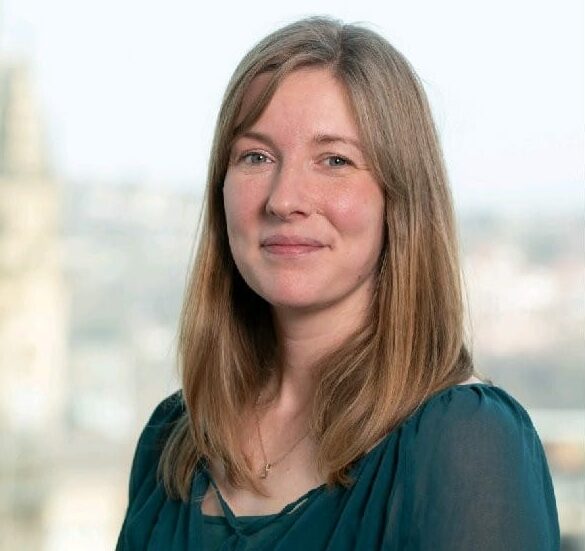
Felicia Rhodes – Associate, Nature-based Solutions Team Leader, ARUP

Archie Ruggles-Brise – Rural Estate Manager, Spains Hall Estate

Whitni Thomas – Head of Corporate Finance, Triodos Bank

Dan Turner – Technical Lead – Land Management and Market Creation, The Rivers Trust

Caleb Wheeler-Robinson – Senior Associate, Finance Earth

Kelly Whittington – Director of Property and Speciality Claims, Aviva

Project lead: Charlie Endsor, Associate
